
"British colonial coffee"
400 article(s) found

Introduction to the Flavor and Taste characteristics of Coffee varieties in Cliff Manor, Jamaica
In 1670, according to the Madrid Treaty, Spain formally ceded Jamaica and other places to Britain. The British immediately used the island of Jamaica as a base for their acts of piracy. Before the earthquake destroyed the port of Loire in 1692, it was once the capital of pirates in the Caribbean. Since then, the British built Kingston and gradually built it into the central city of Jamaica after 1872.

General knowledge of boutique coffee anecdotes of British cafes
British cafes are exclusive to men, and women (except the landlady) are not allowed in. The situation angered British women. In 1674, when cafes were in full swing in England, British women published the "Application for Women to boycott Coffee". They complained that the dignity of British men was now gone because of excessive consumption of the latest popular, pagan drink coffee.

A brief introduction to the treatment method of grinding degree and baking degree of St. Helena coffee beans begged by Napoleon on his deathbed.
In the 15th century, the great navigation era began with the rapid development of world trade. In order to compete for unknown trade opportunities in the world, various explorers were driving their majestic sailboats, adventurous spirits and desirable commodities. Embarked on the voyage of conquering the sea. In the 17th century, the British discovered coffee as a magical plant as far away as Yemen, and its charm conquered

Jamaican Coffee with excellent Flavor introduction to the planting Environment of Silver Mountain Manor Coffee
Columbus came to Jamaica in 1494, and in 1509 Spain declared Jamaica its colony and renamed it Santiago. Spain's slave policy towards the indigenous peoples led to the extinction of the Arawaks on the island as a result of war, disease and enslavement. In order to replenish the labor force, Spain began to sell slaves from Africa to Jamaica since 1517, causing blacks to gradually become teeth.

Turkish coffee shops promote the British democratic revolution
The medieval theory of divine kingship began to crumble in England in the seventeenth century, and after the Glorious Revolution the basis of government had shifted from kings as God's agents on earth to the hands of people bound together by social contracts. After experiencing this great historical turning point, it can be said that the creed of modern democratic society, that is, the will of heaven, was formed. Ren Min Tong

Flavor and taste characteristics of Indonesian Java Coffee introduce Java boutique coffee beans in manor producing area
Later, it was brought to Jamaica by the British. By 1925, growing coffee had become a tradition in Central and South America. In the same year, Hawaii also began to grow coffee, which is the only coffee producer in the United States, and Hawaiian coffee is one of the best coffee in the world. At present, 90% of the coffee beans exported from Indonesia are Robusta beans, and only 10% are Arabica,1920.

The Story of Fine Coffee Culture the Story of British Cafe
British cafes are exclusive to men, and women (except the landlady) are not allowed in. The situation angered British women. In 1674, when cafes were in full swing in England, British women published the "Application for Women to boycott Coffee". They complained that the dignity of British men was now gone because of excessive consumption of the latest popular, pagan drink coffee.

Wild Africa 2019 Kenya Masai Mara River AA washed processed boutique coffee
Professional coffee knowledge exchange More coffee bean information Please pay attention to coffee workshop (Weixin Official Accounts cafe_style) Coffee was originally planted in large estates under British colonial rule, and the harvested coffee beans were shipped to London for sale. The Coffee Act of 1933 was passed and the Kenya Coffee Board was established, transferring coffee sales back to Kenya. Auction system established in 1934,

A Brief Introduction to the Processing Method of Grindness and Roasting Degree of St. Helena Coffee Beans Courted by Napoleon on His deathbed
The Island of St Helena was discovered on May 21, 1502 by Portugal Admiral Joao da Nova, who landed in what is now Jamestown and built a chapel. For more than 80 years, the Portugal kept the island secret, but used it as a resupply point for their East India fleet. HM, 1588

A brief introduction to the flavor and aroma characteristics of St. Helena coffee begged by Napoleon on his deathbed
Once, the French proudly announced to the world that they had their own coffee, that their coffee did not come from Arabia, but that it was the original creature of their native Bourbon island, and that their coffee was naturally different from Arabica coffee. I wonder if it was intentional or ignorant of the French at that time, and it really made most people think that Bourbon Coffee was really native to Bourbon.

A brief introduction to the cultivation of St. Helena coffee beans, geographical location, climate and altitude, which Napoleon begged on his deathbed.
After Napoleon, 26, was appointed commander-in-chief of the Italian Front Army of the French Republic in 1769, he led the army of the French Republic and made many outstanding achievements. But the outstanding record did not bring the great strategist a glorious second half of his life. After the defeat of Russia, the great man fell to the bottom from the peak. After Waterloo in 1815

A brief introduction to the cultivation of St. Helena coffee beans, geographical location, climate and altitude, which Napoleon begged on his deathbed.
Although St. Helena Coffee enjoyed high praise in the 19th century, the popularity of St. Helena Coffee did not continue, and even St. Helena Islanders rarely drank it afterwards. When David R.Henry visited St. Helena Island in 1986, he was honored to taste the island's coffee with the Governor of St. Helena Island, which produced very little coffee and was grown by the Governor in St. Helena.

A brief introduction to the History and Culture of the Origin and Development of St. Helena Coffee begged by Napoleon on his deathbed
Napoleon, as a coffee fanatic, came ashore and lived in Longwude Manor, where he began to write memoirs, dictated by him, and recorded and sorted out by the adjutant brought with him. During his exile from 1815 to 1821, the French dwarf praised St. Helena's coffee. As a result, St. Helena's coffee began to attract the attention of the world, and formed in Paris.

Introduction to the characteristics of Ugandan Coffee Flavor Manor with thick and low acidity
The people of all parts of Uganda resisted the British aggression tenaciously. In 1893, Britain sent troops to occupy the Kingdom of Bunioro, and King Kabarega led some of the people to wage guerrilla warfare for six years. In 1897, King Mwaanga of Buganda raised his army against Britain and later joined Kabarega in the Rango region. In April 1899, the two kings were captured and the uprising failed. To make it easier to rule

Introduction to the flavor of Kenyan coffee
Kenya Coffee Kenya Coffee Kenya is the origin of Arabica coffee trees in Kenya, but it was not until the beginning of the 20th century that coffee cultivation began. Missionaries introduced Arabica trees from the leaves in the 19th century, but did not plant them in large quantities. It was not until 1893 that coffee was cultivated on a large scale after the introduction of Brazil's ancient bourbon seeds.

What's a missionary bourbon? Kenyan French missionary bourbon coffee
Professional coffee knowledge exchange more coffee bean information please follow the coffee workshop (Wechat official account cafe_style) Kenya is one of the birthplaces of mankind, Kenya has even unearthed fossilized human skulls from about 2.5 million years ago. From 1890 to 1963, it was under British colonial rule for about 70 years. Speaking of Kenyan coffee varieties

Tanzanian coffee| Tanzania Coffee Bean Flavor Evaluation_Tanzania Coffee History Origin
Tanzania was colonized by Germany, and the colonial government required Tanzania to grow Arabica coffee in Bukoba. Later, after World War I, ownership passed to the British, who planted more than 10 million coffee seedlings in Bukoba, but clashed with the native Hayas.

Faintly fruity Dominica Santo Domingo Coffee Flavor Manor
At the beginning of the 17th century, when French, Dutch and British pirates were operating in the west of Hispaniola, France began to allow farmers and merchants to gradually colonize the western part of the Spanish island, which was blocked by mountains on the island. It didn't attract the attention of the Spaniards in the east. [3] in 1677, about 4,000 French lived in 11 villages in the west of the island. In 1697, France and

The difference between Chinese black tea and Indian black tea what is the difference in the taste of Indian black tea Assam Darjeeling
The history of Indian black tea is native to northern and eastern India and has been planted on a small scale for hundreds of years. Camellia (Camelliasinensisvar.assamica) is a tea variety native to India, which usually brews stronger black tea. Camellia (Camellia)
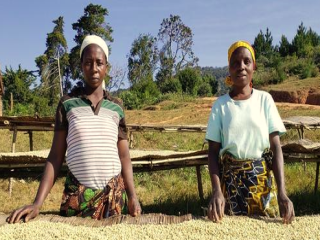
Malawi coffee| Malawi coffee growing history story_Malawi coffee growing area introduction
Coffee was introduced to Malawi in the late 19th century, and folklore tells of a Scottish missionary who brought a small coffee tree in 1878 and planted it in the Blantyre region of southern Malawi. Early Malawi coffee was brilliant when Malawi was a British colony in 1946.